


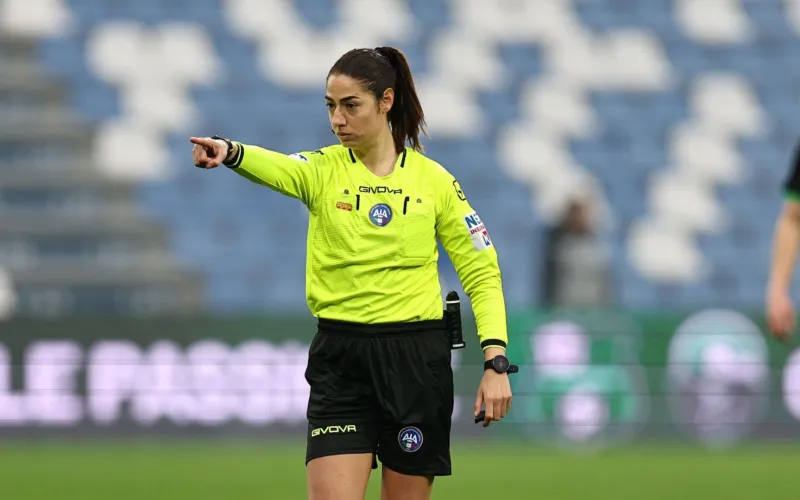
(PRIMASPORT) COMO – A Serie A match that ended up at the center of attention not only for what happened on the pitch, but above all for the episodes of discrimination that accompanied some of the refereeing decisions. During Como-Venice, played on Sunday at the Sinigaglia stadium, Maria Sole Ferrieri Caputi She was the target of sexist insults from the stands, clearly audible even through the audio of the live television broadcast. An episode that sparked indignation and reignited the debate on the respect for women in the world of football, leading to the position taken by the Lombard club and the’Italian Referees Association. The matter was also addressed by the Federal Prosecutor's Officeand of the FIGC, which has launched an investigation to reconstruct the incident and identify those responsible. The insults arose from a particularly tense phase of the match, marked by a controversial refereeing incident. Ferrieri Caputi had initially awarded a penalty to Venezia for a handball by Milla, but then reversed his decision after being called to the monitor by Var. A situation that fueled tension in the stands, where some protests took on an openly discriminatory character. Among the expressions directed at the referee were phrases such as: “Go make pasta with sauce” And “Refereeing is not for you.”, references that have nothing to do with the evaluation of a technical choice and which directly affect her identity as a woman.
Challenging a decision is part of the sporting debate, but using gender stereotypes to delegitimize match officials is a very different issue. The words heard at the Sinigaglia stadium bring attention to a prejudice that continues to manifest itself even at the highest levels of professional football, where the presence of women in refereeing should be considered solely on the basis of skill and preparation. The first institutional response came from Como, which expressed strong condemnation for what happened inside its stadium. In a statement, the club distanced itself from the sexist comments heard during the meeting, calling them “Unacceptable behavior that does not reflect the Club's values and damages its image”. The club also assured that “will do everything in its power to prevent incidents of this kind from happening again in the future”. The reaction of the Italian Referees Association was also particularly strong. The president Francesco Massini, speaking on the matter, condemned all forms of discrimination and verbal violence against members, drawing attention to a phenomenon that does not concern only the top division. Massini recalled how within the’AIA are present beyond 2,200 women, equal to approximately the 6,7% of its members. This figure demonstrates the female participation in the Italian refereeing movement and makes the call for respect for the professionalism of those who take to the field even more significant. Meanwhile, the matter has also reached the sports justice level. The Federal Prosecutor's Office, led by Giuseppe Chinè, has opened an investigation and begun the acquisition of audio and video recordings from the Como Police Headquarters relating to the moments when the insults were uttered. Interviews with Ferrieri Caputi and the personnel present on the pitch are also planned, with the aim of gathering further evidence useful for reconstructing the events. The investigations will clarify individual responsibilities and allow the competent authorities to evaluate any necessary measures.
Regardless of the investigation, the Sinigaglia incident raises a question that affects the entire football system. The presence of women cannot continue to be accompanied by gender-based judgments, especially when these are used to question the authority of a professional. Refereeing errors, whether real or perceived, can be analyzed and challenged on a technical level, without becoming a pretext for personal attacks. The conviction of Como and the AIA represents an important response, as does the opening of the federal investigation. The Ferrieri Caputi case is not just about a referee insulted during a Serie A match, but about the right of every woman to fulfill her role in football without being judged by stereotypes and discrimination. (PRIMASPORT)