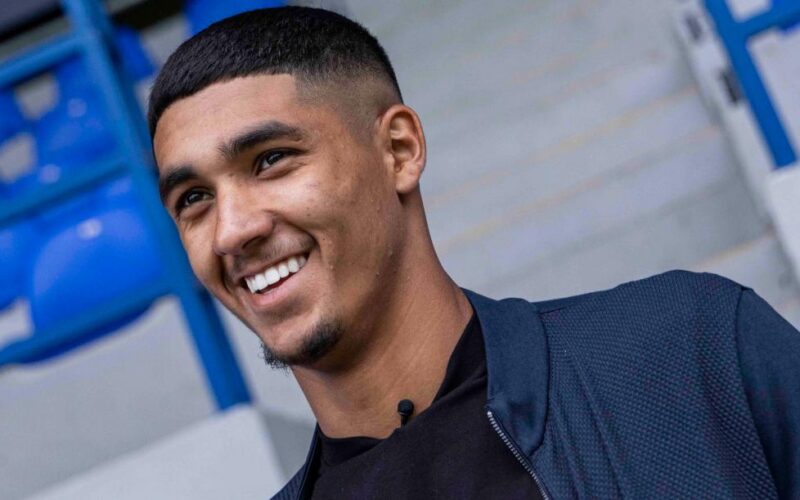
Anan Khalaili will ultimately not become an Inter player. The Union Saint-Gilloise right-back, who would have succeeded Denzel Dumfries in Milan, who had since moved to Real Madrid, failed his medical. Inter president Beppe Marotta's explanations were very clear, while the player himself was both cryptic and dismissive on social media. But a question arises: why do potential heart problems—because that's what they are—restrain his competitive activity in Italy, while not elsewhere? The answer exists, and it's extremely precise. This isn't anything new, given that the Beneamata has a long history of similar and disparaging situations spanning 30 years.
Let's start with the latest chapter in the saga: the Khalaili affair. "He failed the medical. The decision is CONI's, and we have to abide by a force majeure situation like this," Marotta stated. Here, we need to rewind the tape to what happened from Friday, July 10th onward. The agreement was complete, with the sum of €25 million plus bonuses to be paid to Union Saint-Gilloise. However, CONI's Institute of Sports Medicine requested additional tests, following which it denied the player's sports fitness. A transfer to Inter, or any other Italian club, is therefore no longer possible. "It can happen that you hate something that is good for you. And it can happen that you love something that is bad for you," he commented in a somewhat cryptic message on Instagram Stories. The fact is, his career will be able to continue: are we therefore dealing with foreign superficiality or excessive caution here?
Paolo Zeppilli, a former Full Professor of Sports Medicine who has since become a sports cardiologist and doctor for the Italian Football Federation (FIGC), clearly outlined the situation to the Gazzetta dello Sport. "Serie A clubs," he noted, "must comply with Italian law to sign a player. Since 1982, the Ministry of Health has mandated a competitive sports medical examination; in 1995, maximal stress tests and echocardiograms were added to the competitive fitness tests. In England, for example, the examinations are just as systematic, but the player takes personal responsibility for his actions. In Italy, however, this isn't the case; despite many flaws, the athlete's safety is the top priority. Some might call it a paternalistic system, but protection is at the highest levels for players and their clubs. Ours is a lifestyle choice, an ethical one." And, coincidentally, there are numerous precedents involving Inter.
The comparison with England cannot help but bring to mind Christian Eriksen, the talented Danish midfielder who, after contributing to the 2021 Scudetto, tragically fainted at the subsequent European Championships. The need for a subcutaneous cardiac defibrillator forced him to leave Inter, having been declared unfit for sport by the CONI Institute of Sports Medicine. This didn't stop him from returning to the game in January 2022, first at Brentford and then at Manchester United, two English Premier League clubs. Having since moved to German club Wolfsburg, on June 7, 2026, he suffered another cardiac arrest on the pitch, surviving thanks to the subcutaneous defibrillator. Despite everything, he has stated that he has no intention of retiring just yet: if the Italian system were applied everywhere, this prospect would be literally impossible.
But Inter have faced similar situations in the past. The most famous case is probably that of Nwankwo Kanu, who in 1996 was considered perhaps the most promising young striker in the world. Fresh from winning three Dutch championships with Ajax, along with the 1995 Champions League and the 1996 Olympic gold medal with Nigeria, he joined the Nerazzurri in the summer of his twentieth birthday, only to discover a congenital heart condition during his medical. Then-president Massimo Moratti personally paid for his aortic valve replacement surgery, and after three years spent more in the clinic than on the pitch, the towering striker moved to his "usual" England to become a key figure for Arsenal and then a solid addition for West Bromwich Albion and Portsmouth. He only retired in 2012: without the move to Milan, his health problems might never have surfaced.
Less well-known, but dangerously similar to Kanu's, was the story of Khalilou Fadiga. A lightning-fast left winger who became one of the revelations of the 2002 World Cup with Senegal, he too was signed by Inter shortly thereafter. It was 2003, the year in which, during the ritual medical, it was discovered that he suffered from cardiac arrhythmia under stress. Here too, the protocol was the usual one: denied medical fitness, additional specialist visits, and surgery several months later to resolve the player's heart problems. Only then did he make the equally ritualistic move to England: in his case to Bolton, then Derby County and Coventry City. This time, however, he never managed to repeat the excellent performances he had shown at the start of his career. But it doesn't matter: when faced with the risk of tragedies on the pitch, like those that cost the lives of Marc-Vivien Foé, Antonio Puerta, Piermario Morosini, and Renato Curi again in the 1970s, or moments of terror like those that fortunately spared Lionello Manfredonia, the aforementioned Eriksen, and more recently Edoardo Bove and Evan N'Dicka, it's only right to put your heart first. Even football.