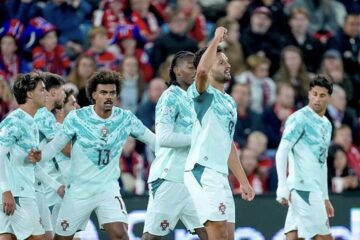
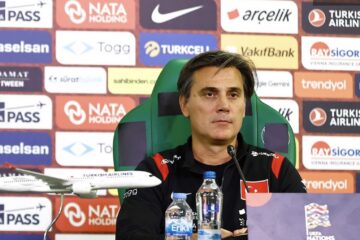
“"To paint a great wall, you don't need a big brush, but a great brush"—said a famous television commercial from the 1980s. A maxim that fits perfectly with the new direction of the Italian national football team. Given that the coach can do nothing alone, but as with any team, an organization is needed, which has been and always will be the most complex of all. The choice of the Azzurri's first-choice coach must meet the criteria of full harmony with the Serie A clubs. Because if local talents end up on the bench or are sent to gain experience in Serie B without any certainty of fitting into their original club's plans, the deck of cards becomes thinner and the chances of crafting a squad that guarantees continuity in the expression of technical and physical talent are inevitably reduced. The two-match friendly match in early June, played by Baldini's experimental national team against Luxembourg and Greece, marked the end of the 3-5-2 formation in favor of a return to the 4-3-3, the formation adopted by the teams that dominated the World Cup. And speaking of young talents, Baldini has called up four from Germany, several from the second division, and one even from Serie C. This number becomes two when you include Dominic Vavassori, a recent Serie A debutant with 23 goals in two seasons with Atalanta U23. The Nations League is upon us, and Italy will face Belgium (debuting on September 25th in Rome), France, and Turkey in their group. Two will advance to the quarterfinals, with the third team playing in a play-off to avoid relegation to Serie B. The team will start with the pillars (Donnarumma and Tonali, whose characteristics are similar to Pirlo) and certainly the Inter block (Dimarco, Barella, Pio Esposito, and Bastoni, if the latter can deliver performance and focus in a defense that needs to be squared together) for a 4-4-2 in which the young Palestra deserves a starting role. The key players are the attacking right winger and the second striker. Italy needs prolific players, as well as speed and verticalization. Therefore, it will be important to expand the squad with quality and promising players to create a competitive backbone that can deliver results, especially at the European level, and help us climb the FIFA rankings, leading us back to the World Cup finals.
The new course of the national team and the short, medium and long-term prospects
 2 Mins Read